
What’s the Heavy Duty Connector
In simple terms, a heavy - duty connector is like a "super socket" for industrial equipment. It is specifically designed for harsh environments to stably transmit high currents and complex signals.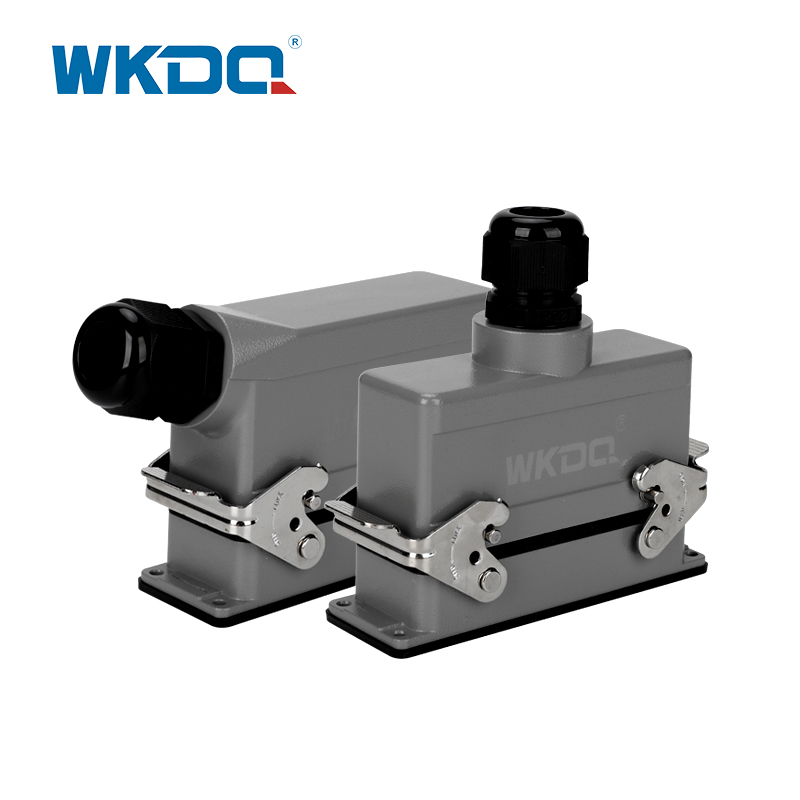
Core Advantages
Reliability: It ensures stable and continuous equipment operation even in harsh environments, such as those with vibration, oil, and moisture. This significantly reduces downtime caused by connection failures.
High Protection Rating: It features IP67 or IP68 ingress protection,resisting the water and dust. It is ideal for outdoor and demanding industrial settings.
Modular Design: It supports the integration of power, signal, data, fiber optics, and even pneumatic lines in a single connector. This saves space, streamlines cabling, and simplifies installation and maintenance.
Long Service Life: Generally, it is rated for over 1,000 mating cycles. Some high - end products can last 5,000 to 10,000 cycles, ensuring long - lasting durability.
Main Types
By Shape: Primarily, they are available in rectangular and circular formats. Rectangular connectors offer high space utilization, making them suitable for indoor equipment. Circular connectors provide superior resistance to shock and vibration, making them better suited for outdoor or mobile applications.
By Function: They can be categorized into pure power connectors, pure signal/data connectors, and hybrid connectors that integrate power, signal, data, and fiber optics.
Installation and Wiring
Wiring is a critical step in using heavy - duty connectors, typically involving crimp termination. The general process is as follows:
1. Prepare Tools: Gather tools such as a crimping tool, wire stripper, and screwdriver.
2. Prepare Wires: Strip the insulation from the wires to the appropriate length according to the wiring diagram.
3. Crimp Contacts: Insert the stripped wire into the corresponding cavity of the contact and crimp it securely with the crimping tool. Ensure the wire is fully inserted for a reliable connection.
4. Assemble Connector: Insert the wired contacts (insert) into the connector housing, tighten any retaining screws, and then mate the hood/housing with the base, locking it securely.
5.Error Correction: If a wiring error occurs, use a removal tool to extract the contact and wire together, and then repeat the process correctly.
Common Applications
Heavy - duty connectors are widely used across various industries due to their high reliability and robustness.
Industrial Automation: They are used in CNC machines, 3D printers, robotic arms, and other equipment to ensure uninterrupted production processes.
Rail Transit: They are a core component in train gangways, connecting electrical controls, signals, and networks between carriages, withstanding constant vibration and harsh weather.
Outdoor and Energy: They are used in outdoor power supplies, photovoltaic (solar) panels, and heavy construction machinery. Their waterproof and dustproof properties protect the equipment.Contact: WONKE ELECTRIC Sales Department Email: sales21@wonkedq.com