
Why Every Electrical Assembly Line Needs Professional Hand Crimp Tools?
In the world of industrial electrical engineering, the reliability of a connection often starts with the quality of the termination. For decades, professionals have debated the balance between automated crimping and manual solutions. However, when flexibility and field serviceability are paramount, the role of professional hand crimp tools remains irreplaceable. These devices ensure that terminal blocks, connectors, and wire assemblies meet stringent safety and performance standards, especially in sectors like plant engineering and machine building.
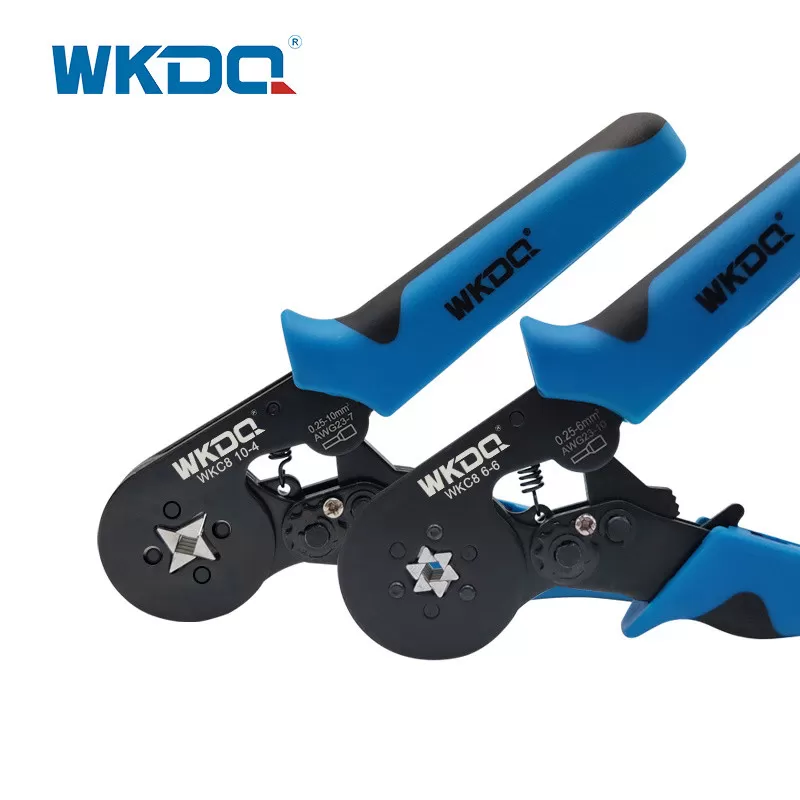
The Core Function: Beyond Simple Compression
A common misconception is that any plier-style tool can create a secure electrical joint. In reality, dedicated crimping pliers are engineered with calibrated dies and ratchet mechanisms that control compression force precisely. Without this precision, the electrical pathway can suffer from high resistance or mechanical pull-out failures. For manufacturers and panel builders, selecting the correct tool directly impacts long-term operational stability. This is why modern facilities integrate specialized crimping solutions into their quality assurance workflows, ensuring each terminated wire matches the original design specifications of the terminal block manufacturer.
Key Characteristics of Industrial-Grade Crimping Solutions
When evaluating equipment for a professional workshop, several technical attributes distinguish standard pliers from genuine engineered crimping tools. These attributes are defined by international standards that govern electrical installations and machinery safety.
- Precision Ground Dies: Interchangeable jaw sets that match specific wire gauges and terminal types.
- Ratchet Override System: Prevents incomplete crimps by locking the tool until full compression is achieved.
- Ergonomic Force Transfer: Leverage designs that reduce operator fatigue while maintaining consistent mechanical advantage.
- Material Durability: Alloy steel construction with anti-corrosion coatings for long-term field use.
Industry Applications: Where Manual Precision Meets Automation
While automated crimping machines dominate mass production, there are critical scenarios where manual solutions are not just an alternative but a necessity. Field maintenance, prototype development, and small-batch custom assemblies rely heavily on operator skill paired with reliable crimping equipment. In sectors like process industry and electronic equipment manufacturing, where downtime is costly, technicians need portable yet accurate termination solutions. Furthermore, when working with sensitive components or limited access panels, the controlled action of a manual crimper offers superior tactile feedback compared to automated systems.
Comparative Overview: Automated vs. Manual Crimping Environments
The following table outlines typical application scenarios without referencing production volumes, focusing purely on operational characteristics.
| Work Environment | Preferred Tool Type | Key Operational Demand |
|---|---|---|
| On-site Field Maintenance | Professional Crimping Pliers | Portability & immediate feedback |
| Control Panel Assembly (Custom) | Ratchet-style Crimping Tools | Mixed wire gauge flexibility |
| High-cycle Production Floor | Automated Crimping Stations | Cycle time consistency |
| Repair & Overhaul Shops | Interchangeable Die Crimping Tools | Adaptability to various terminal families |
Connecting Tool Performance to Terminal Reliability
The interaction between the crimping profile and the terminal barrel is a science in itself. A correct crimp deforms the wire strands and the terminal barrel into a cold-welded homogeneous mass. Inadequate tools cause air gaps that lead to oxidation and heat generation. That is why engineering teams prioritize validation tests such as pull-force verification and millivolt drop measurements when deploying new crimping equipment. These tests confirm that the tool's die geometry matches the terminal's metallurgy and insulation support requirements. For any facility aiming to satisfy high safety standards, the traceability of the crimping tool's calibration is as vital as the terminal block's certification.
Challenges in Selecting Appropriate Crimping Equipment
One of the most frequent issues in electrical assembly is the mismatch between a tool's specified wire range and the actual conductors used. Many generic tools claim wide compatibility but fail to provide the necessary compression for fine-stranded or tinned wires. Professional hand crimp tools, in contrast, are often designed for a specific terminal series or a narrow wire range. This specialization ensures that the crimp height and width fall within the tolerances defined by electrical standards (e.g., UL or IEC). Another challenge is the lack of cycle control; without a full-cycle ratchet mechanism, operators might release the tool prematurely, resulting in a weak mechanical bond. Therefore, investing in certified crimping solutions reduces rework rates and enhances overall system durability.
Operational Best Practices for Maintenance Teams
To maximize the lifespan and accuracy of manual crimping equipment, maintenance teams should follow a structured approach. Regular inspection of the die surfaces for wear or debris is fundamental. Additionally, periodic calibration verification using a crimp-height micrometer ensures that the tool continues to produce acceptable connections. Unlike single-purpose pliers, high-grade crimping tools can be re-certified through gauge testing. Documentation of these checks forms part of a comprehensive quality management system, especially in industries subject to regulatory audits. When a tool fails a gauge test, immediate replacement or refurbishment is recommended to prevent latent defects in the electrical infrastructure.
Innovations Driving the Evolution of Manual Crimping
Contrary to the perception that manual tools are static, recent innovations have introduced features like interchangeable die cassettes and positioners for insulation support. Modern hand crimp tools now incorporate color-coded wire-range selectors and tooling that reduces hand force by up to thirty percent while maintaining full-cycle ratchet control. Some advanced models include a built-in crimp counter to monitor usage cycles, alerting technicians when recalibration is due. These developments address the growing demand for lean manufacturing practices, where every process step must be both efficient and verifiable. As terminal blocks evolve to smaller pitches and higher current densities, the corresponding crimping tools must adapt with finer pitch dies and improved alignment guides.
Standard Compliance and Certifications
For any electrical component or tool used in industrial environments, compliance with recognized safety standards is non-negotiable. Reputable crimping tools carry certifications or statements of conformity with standards such as UL 486 or IEC 60947. These certifications ensure that the tool has passed tests for dielectric withstand, pull-out force, and temperature rise at rated current. When procurement specifications require full traceability, selecting equipment from manufacturers who provide certificate of conformance for each production batch is essential. Furthermore, for international projects, tools should meet regional requirements like CE for Europe or CCC for China. This attention to certification directly supports the goal of achieving high levels of safety and quality across the plant's electrical systems.
Integrating Manual Tools into a Broader Electrical Strategy
An efficient electrical workshop does not rely solely on one type of equipment. Instead, it integrates professional hand crimp tools alongside automated cutting, stripping, and testing machines. The manual tools serve as the backbone for rework, modification, and low-volume specialized connections. For example, when a control cabinet requires an additional sensor line during commissioning, technicians reach for a reliable manual crimper rather than reprogramming a fully automated machine. This hybrid approach maximizes both flexibility and cost-effectiveness. It also empowers engineering teams to maintain high standards without being constrained by production schedules. Therefore, the role of high-quality crimping tools extends beyond simple assembly; it is a strategic component of agile manufacturing and maintenance operations.
Training and Skill Development for Operators
Even the finest crimping pliers will produce defective terminations if used incorrectly. Proper training programs should cover die selection, wire preparation (strip length and strand straightness), insertion depth, and full-cycle ratchet completion. Visual inspection criteria, such as checking for bell-mouthing, exposed strands, or insulation crush, are also critical. Organizations that invest in periodic operator certification for crimping processes see significantly lower field failure rates. Additionally, using go/no-go gauges to validate sample crimps before starting a batch of terminations creates a powerful quality checkpoint. By embedding such practices, facilities transform a simple manual operation into a controlled, repeatable process.
Why Partner with a Specialized Manufacturer for Your Crimping Needs
The market offers a wide range of termination tools, but not all suppliers understand the intricate relationship between the terminal, the wire, and the crimping tool. This is where a manufacturer with deep expertise in electrical connectivity makes a difference. Wonke Electric Co., Ltd, established in 1999, is a professional manufacturer that not only produces terminal blocks and air fan filters but also comprehends the full ecosystem of electrical assembly. Their engineering team develops solutions that align accessory tools—including compatible crimping equipment—with the specific requirements of their terminal lines. By choosing a supplier that views the crimping tool as an integral part of the connection system, electrical engineers eliminate compatibility guesswork. Wonke Electric supports OEM requirements and provides the technical guidance necessary to achieve internationally recognized standards of safety, quality, and performance. Whether for plant engineering, machine building, or process industry applications, their holistic approach to service ensures that customers receive not just components, but reliable termination methodologies. This dedication to comprehensive support reflects their understanding of true service: helping customers bring new ideas and solutions to markets worldwide, with every crimp meeting the highest expectations.
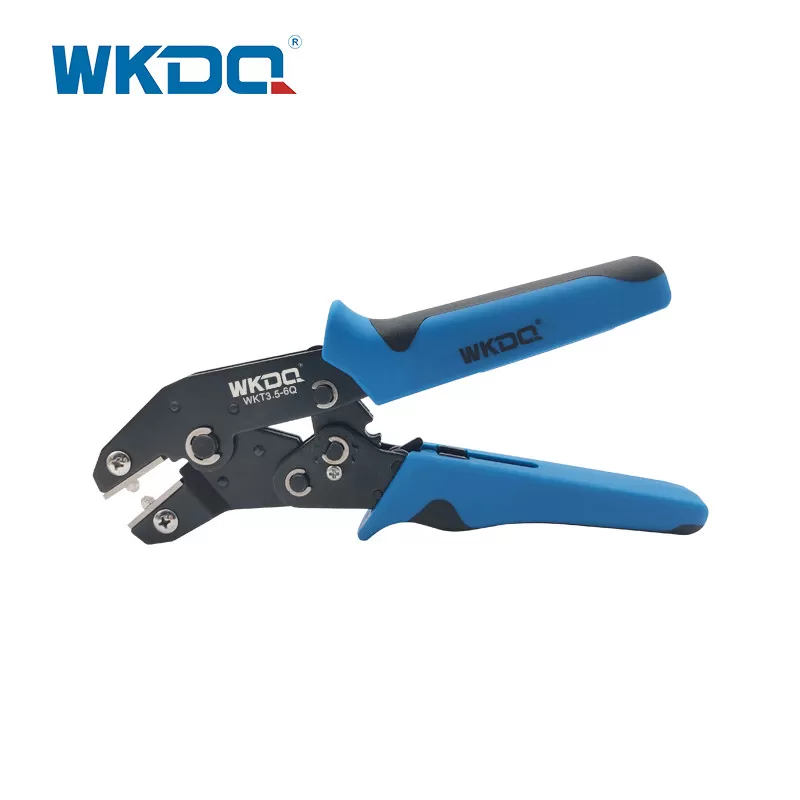
Summary of Best Practices for Manual Crimping Operations
- Always verify wire gauge compatibility before selecting a crimping die.
- Perform a pull test on the first sample of each batch to validate tool setup.
- Store crimping pliers in protective cases to prevent damage to precision dies.
- Maintain a calibration log with regular go/no-go gauge checks.
- Replace any tool showing signs of jaw wear or incomplete ratchet release.
In conclusion, the selection and use of professional hand crimp tools is a technical decision that directly impacts electrical system reliability. From field maintenance to custom panel assembly, these tools remain indispensable. When paired with a manufacturer like Wonke Electric Co., Ltd, which provides integrated solutions from terminal blocks to specialized tooling, electrical professionals can confidently meet high standards of safety and performance. The company's decades of experience and commitment to R&D ensure that customers receive not only hardware but also the expertise needed for successful electrical engineering projects worldwide.